Choose how you want to learn
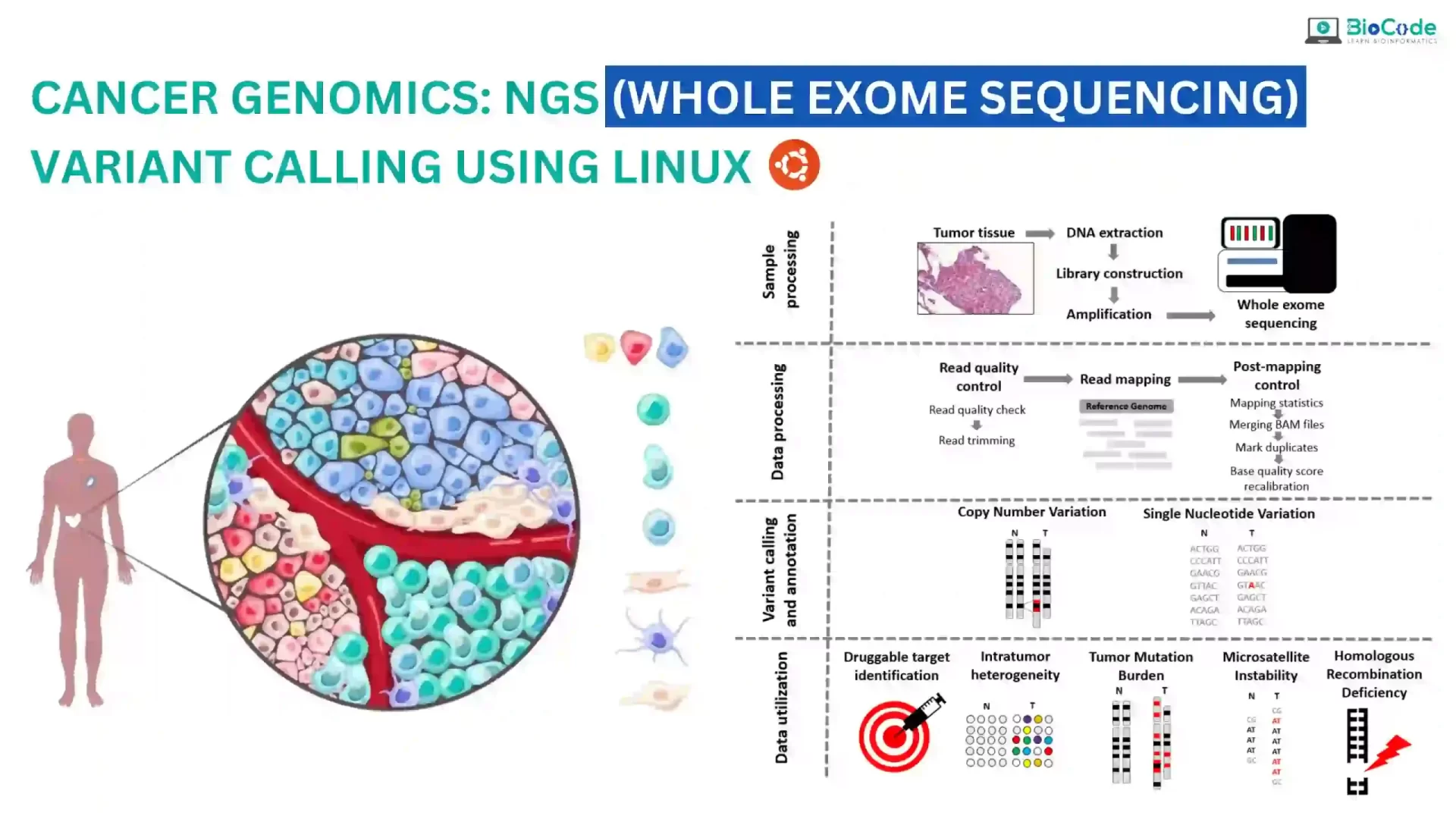
Cancer Genomics: NGS (Whole Genome Sequencing) Variant Calling Using Linux
Buy this course
One-time purchase of this standalone course.
Continue to course checkout →Included with Annual All Access
This course is included while your Annual All Access membership provides access. This is a recurring subscription.
No free trial is configured for this plan. Review the amount due and renewal terms at checkout.
Compare membership plans →Already purchased? Sign in to access your learning. Review your cart, final price and payment terms before placing an order.
Cancer Genomics: NGS (Whole Genome Sequencing) Variant Calling Using Linux
About Course
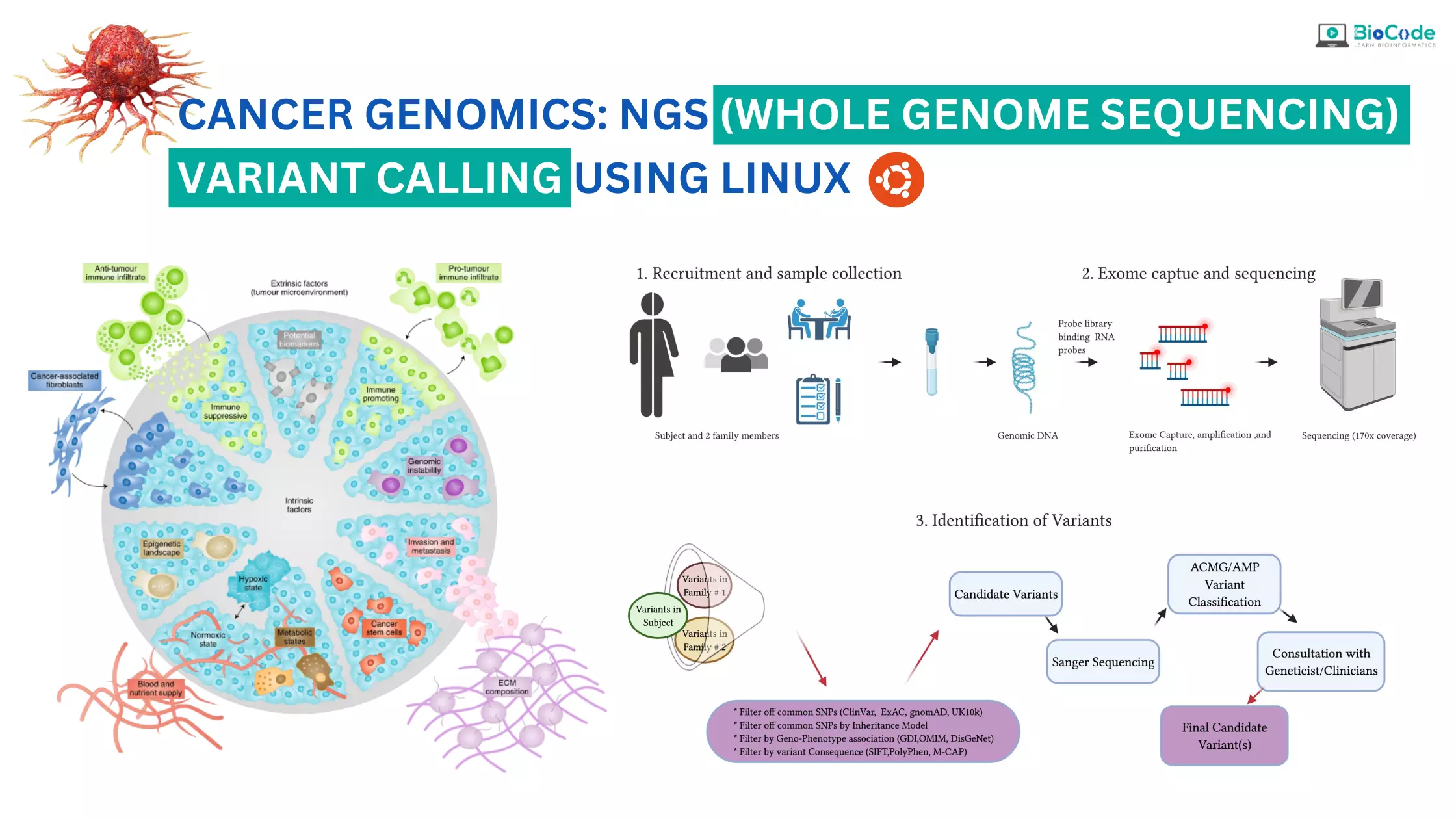
In the field of cancer genomics, the analysis of NGS/whole genome data has become an integral part of cancer research. This course provides a comprehensive overview of the process of analyzing NGS data to identify genetic variants in cancer patients, including substitutions (SNPs) and insertions/deletions (indels).
The course begins by covering the basics of NGS, including the technologies and sequencing platforms used in NGS experiments. It then moves on to teach the student how to obtain raw whole genome datasets for any organism of any disease, and how to perform quality control on these datasets.
The student will learn how to preprocess the data, including trimming and mapping the reads against a reference genome. They will also learn about post-alignment quality control and the process of recalibrating reads to ensure accuracy.
The main focus of the course is on variant calling, where the student will learn how to identify variants in the disease/patient samples using various tools and algorithms. This process involves identifying and classifying genetic variants, including SNPs and indels, and annotating them to determine their functional significance.
The student will also learn how to filter and annotate the resulting variant call format (VCF) files to obtain meaningful insights into the genetic basis of disease. These annotations may include functional annotations such as gene
annotations, pathway annotations, and annotations related to the frequency of the variant in the general population.
Overall, this course provides a comprehensive introduction to NGS data analysis for cancer genomics, including the process of obtaining, processing, and analyzing whole genome data to identify genetic variants that may be associated with cancer.
Cancer whole-genome variant calling, done the way a lab actually does it
Cancer is a disease of the genome, and whole-genome sequencing is the most complete view of it available. But the gap between a tumour FASTQ file and a defensible list of somatic variants is wide, and most of what goes wrong happens in steps that are easy to skip. This course closes that gap using the Linux command-line tools that real variant-calling pipelines are built from, across roughly 11 hours 24 minutes of material.
What you work through
- NGS and whole-genome sequencing for cancer — how tumour sequencing differs from germline work, and why that difference drives every later decision.
- Quality control — reading FastQC output properly and knowing which problems are fatal and which are cosmetic.
- Mapping — aligning reads to the reference genome and evaluating whether the alignment is trustworthy.
- Post-alignment processing and recalibration — duplicate marking and base quality score recalibration, the steps that separate a clean variant set from a noisy one.
- Variant calling — SNPs and indels, structural variants and copy number changes.
- Somatic versus germline calling — the distinction that determines whether your driver list is real.
- Filtration and annotation — reducing raw calls to a credible set and attaching biological meaning.
- Variant effect prediction — working out which changes plausibly matter.
Why somatic calling is the hard part
Every genome carries millions of inherited variants. Separating the mutations a tumour acquired from the ones the patient was born with is the central problem of cancer genomics, and getting it wrong inflates mutational burden, contaminates driver gene lists and distorts downstream signature analysis. The course treats tumour-normal reasoning as a first-class topic rather than a footnote, because in practice it is where conclusions are made or lost.
What you can do afterwards
You will be able to take tumour sequencing data and run it end to end on the command line — QC, alignment, recalibration, calling, filtering and annotation — and explain why each step is there. You will also be able to read someone else’s pipeline and see what it is doing.
For the design decision that precedes all of this, see our comparison of whole-genome versus whole-exome sequencing for cancer. We also run tumour analysis directly as a cancer genomics analysis service.
Who it suits
Cancer researchers with sequencing data and no pipeline, bioinformatics students moving into clinical or translational genomics, and lab members who need to run variant calling themselves rather than wait on a core facility. Linux is taught as you go; no prior command-line experience is assumed.
Learning path
NGS & variant calling
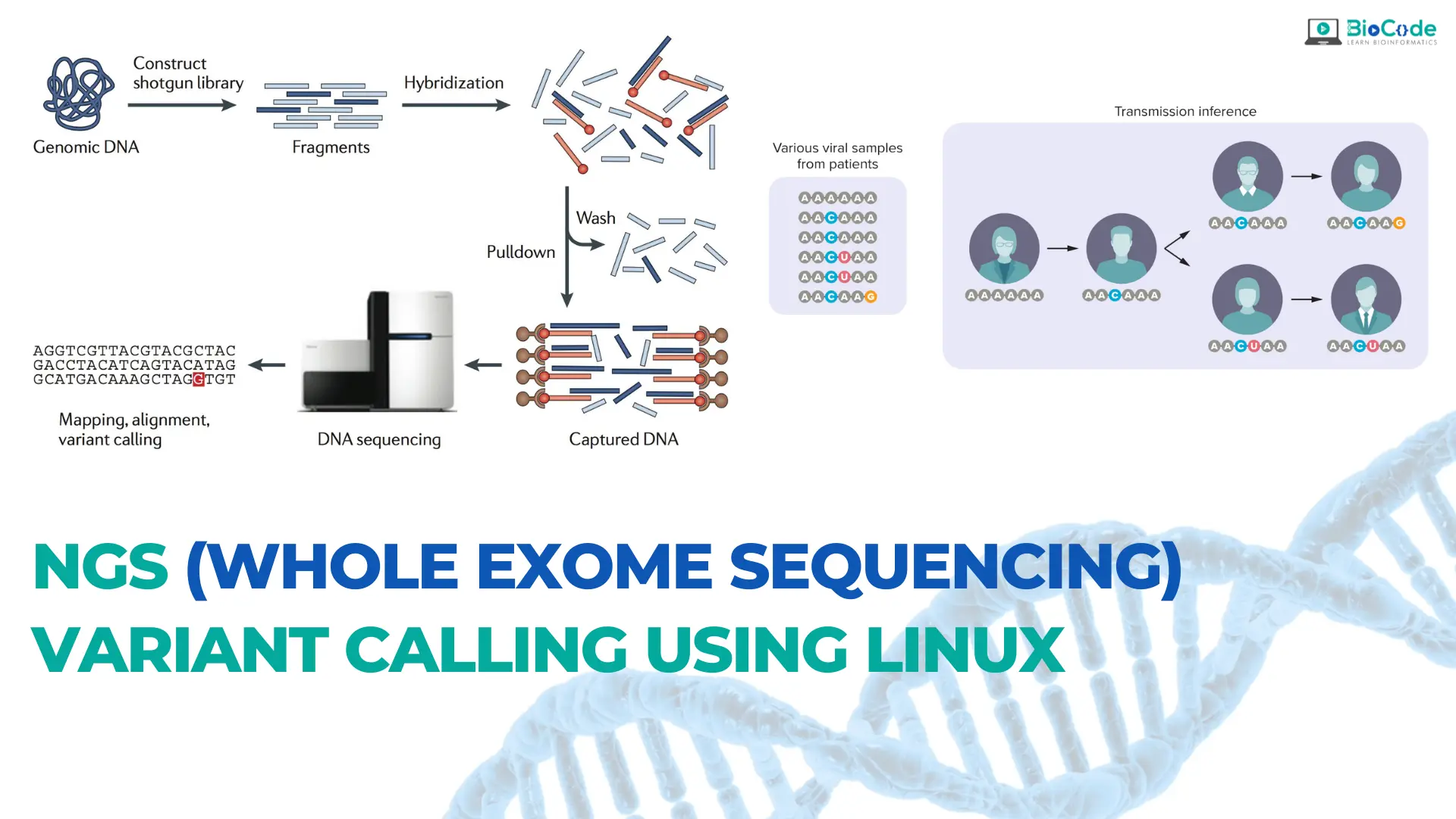
- 1 Hands-on: NGS (Whole Exome Sequencing) Variant Calling Using Linux
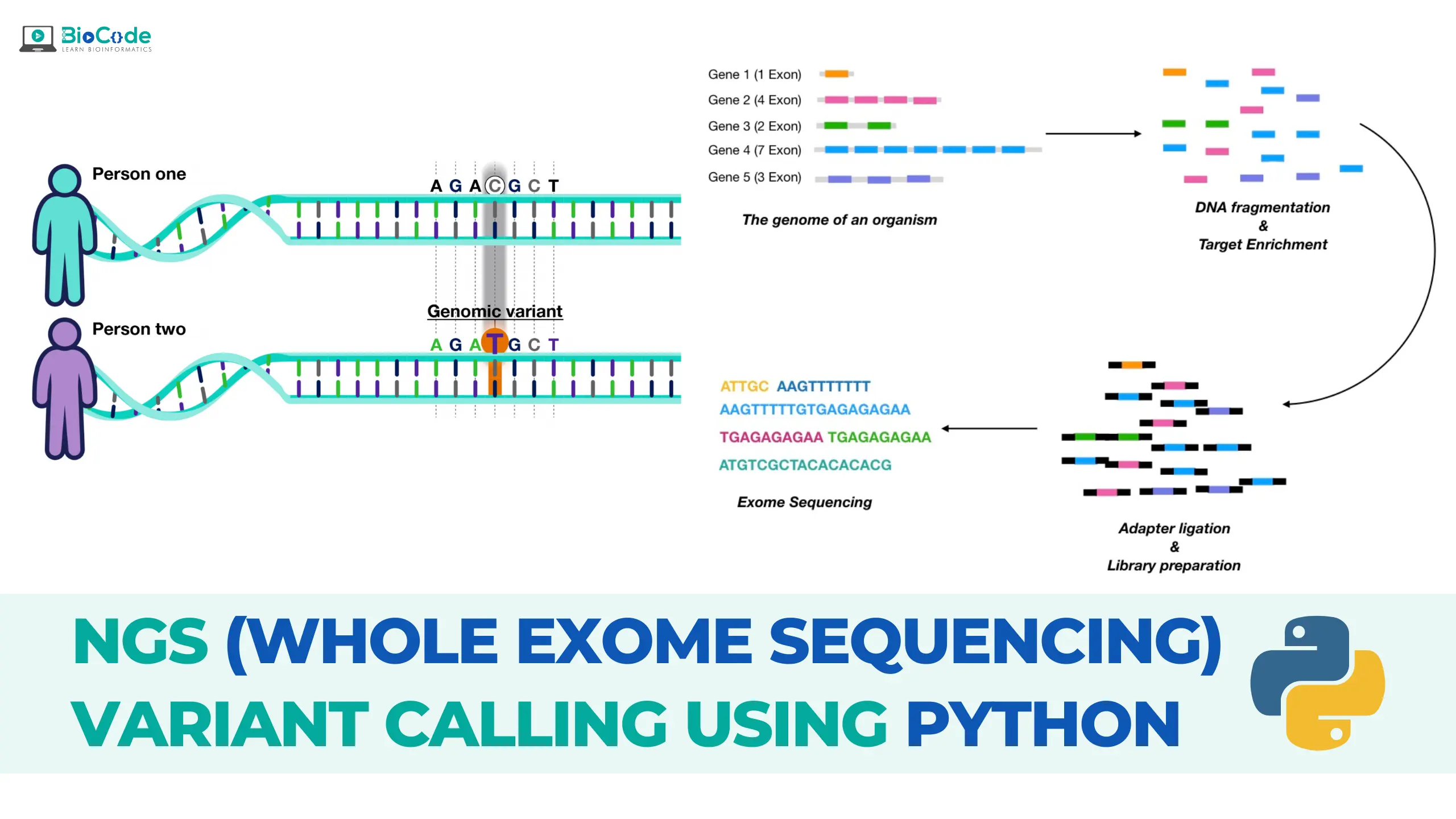
- 2 Hands-on: NGS (Whole Exome Sequencing) Variant Calling Using Python
- 3 Cancer Genomics: NGS (Whole Genome Sequencing) Variant Calling Using Linux · you're here
- 4 Cancer Genomics: NGS (Whole Exome Sequencing) Variant Calling Using Linux
Not ready to enrol?
Get the free syllabus & course updates
We'll email you the full outline for this course plus a starter guide — no spam, unsubscribe anytime.
Tools & technologies you'll use
- Linux
- Bash / CLI
- FastQC
Course Content
In-depth Introduction to NGS and Whole-Genome Sequencing for Cancer Genomics
-
In-depth Introduction to NGS and Variant Calling
20:12 -
Fundamentals of Whole Genome Sequencing: A Comprehensive Approach to Sequence a Genome
32:33 -
Cancer Genomics: Role of WGS in Cancer Research
35:53 -
Haploid vs. Diploid Organisms for Variant Calling
07:26 -
Ploidy and Its Significance in Disease Research
14:58 -
A Bioinformatics Approach Towards Germline vs. Somatic Mutations
14:30 -
Single Nucleotide Polymorphisms: An Introduction to SNPs and Their Types
31:22 -
Structural Variations: Large Scale Variations in Genomes
08:55 -
Copy Number Variations: Role of CNVs in Diseases
10:29
Hands-on Whole-Genome Variant Calling
Additional Downstream Analysis
Additional Lectures
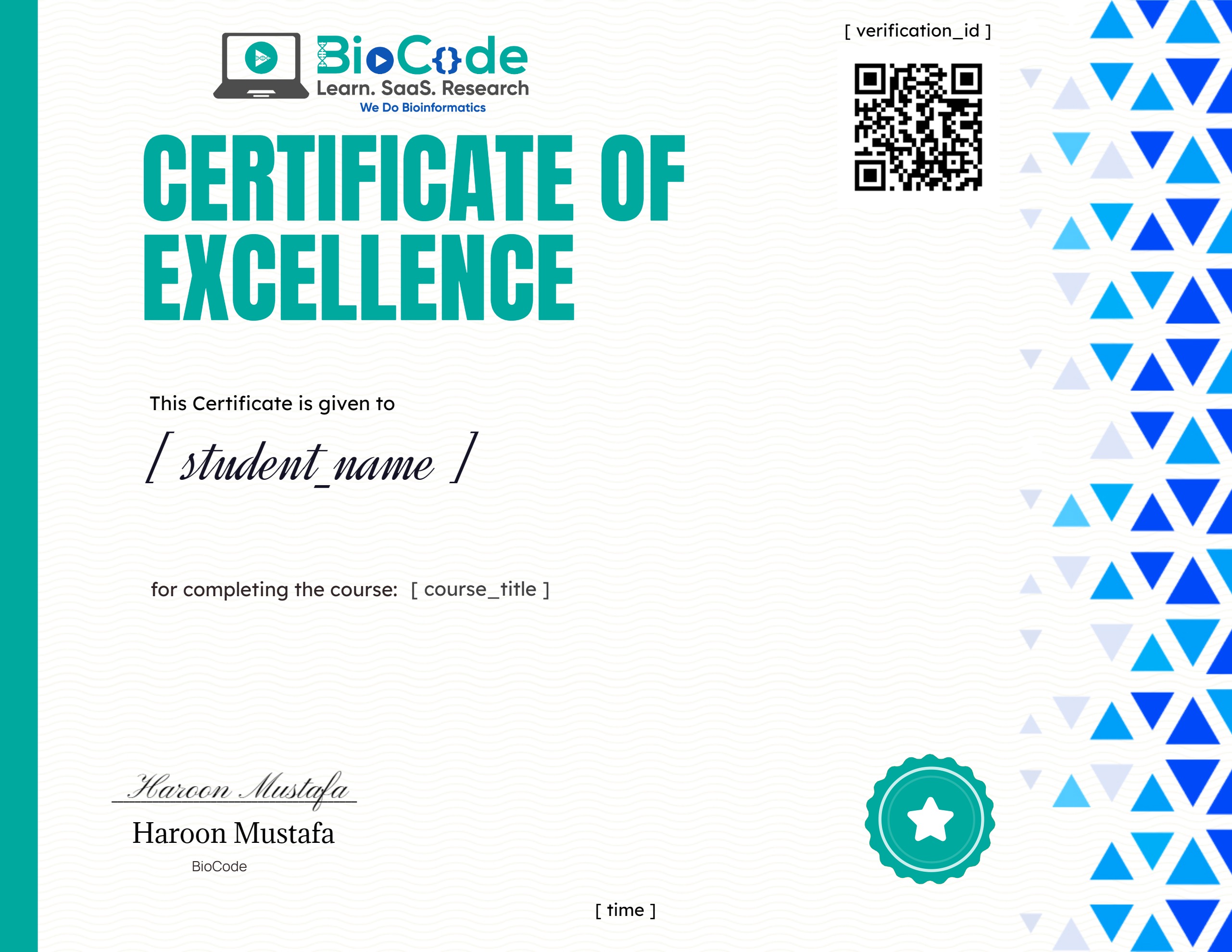
Earn a certificate
Add this certificate to your resume to demonstrate your skills & increase your chances of getting noticed.
Student Ratings & Reviews
Common questions
Do I need any prior experience for this course?
The course is taught from first principles, so you do not need previous experience with the specific tools it covers. A working understanding of molecular biology will help you get more from it.
How long does Cancer Genomics: NGS (Whole Genome Sequencing) Variant Calling Using Linux take to complete?
The course contains roughly 11 hours 24 minutes of material across 4 sections. It is self-paced, so you can work through it as quickly or slowly as suits you.
How long do I have access after enrolling?
Access is lifetime. Once you enrol you keep the course and any future updates to it, with no recurring fee.
Do I get a certificate?
Yes — you receive a certificate of completion once you finish the course, which you can share on LinkedIn or include in a CV.
Is this course hands-on or theory only?
It is project-based. You work with real research datasets and run the analyses yourself rather than only watching them being explained.