Choose how you want to learn
Hands-on: Single-Cell RNA-Sequencing Data Analysis Using Command-Line and R [Complete Training]
Buy this course
One-time purchase of this standalone course.
Continue to course checkout →Included with Annual All Access
This course is part of Annual All Access, so one membership opens it and every other specialist course.
Compare both plans →Already bought this course? Sign in to start learning.
Hands-on: Single-Cell RNA-Sequencing Data Analysis Using Command-Line and R [Complete Training]
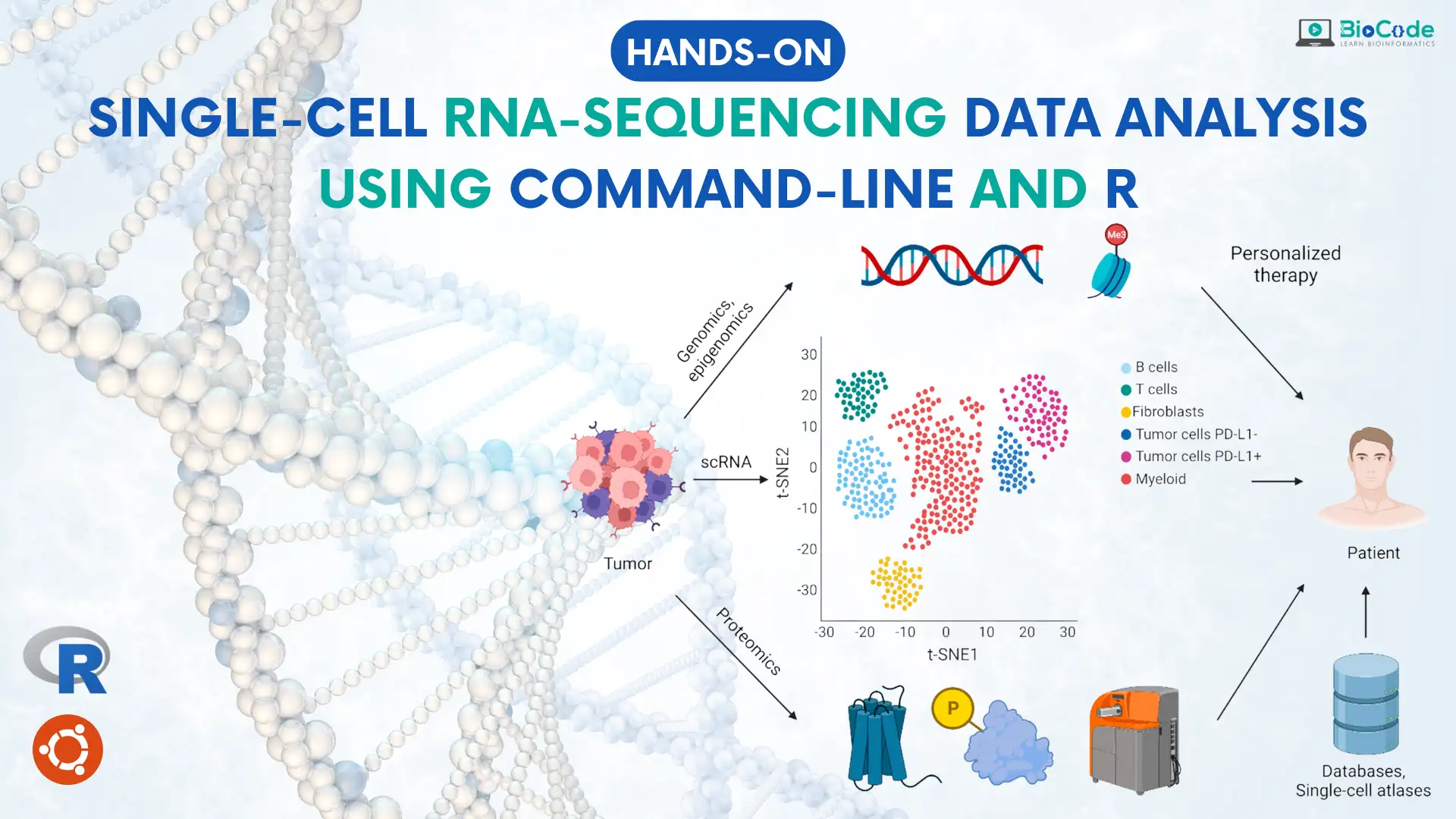
About Course
This course provides a comprehensive end-to-end analysis of single cell RNA sequencing (scRNA-seq) data, tailored to guide beginners without prior programming or Linux knowledge. The course emphasizes the use of command-line tools and R packages such as Seurat and scType, and focuses on the fundamental differences between scRNA-seq and bulk RNA-seq, highlighting the necessity for scRNA-seq in investigating cellular and tumor heterogeneity. The course provides a thorough overview of all available scRNA technologies, with particular emphasis on 10x genomics and Smart-seq2, and offers both theoretical and hands-on training for every step in the data analysis pipeline.
Students are instructed on how to process raw scRNA datasets, including UMI, cell barcode filtering, alignment against reference genome, and deduplication and quantification to generate a count matrix. They also learn how to perform quality control on the data, remove unwanted dead cells, normalize and scale the data, perform data imputation, and perform dimension reduction and visualization through UMAP, tSNE, and PCA plots. The course covers cell clustering and subpopulation identification, including cell annotation, and also provides instruction on cell lineage and trajectory analysis. Finally, students learn how to perform differential gene expression analysis, identifying marker genes expressed only in their chosen subpopulations of cells. Overall, this course provides a comprehensive and practical introduction to scRNA-seq analysis for beginners, enabling them to gain the necessary skills to conduct their own analyses.
End-to-end single-cell RNA-Seq, from raw reads to annotated cell populations
Single-cell RNA sequencing measures gene expression one cell at a time. Where bulk RNA-Seq averages across a whole tissue — hiding the rare populations and the heterogeneity that often matter most — scRNA-Seq resolves which cell types are present, how many of each, and how their transcriptional programmes differ between conditions. It has reshaped cancer research, immunology and developmental biology for exactly that reason.
This is a complete, hands-on training covering roughly 10 hours 24 minutes of material. It assumes no prior programming or Linux experience and builds both, because the analysis genuinely requires the command line for the early steps and R for everything after.
What you work through
- The biology and the technology — cellular and tumour heterogeneity, why single-cell resolution answers questions bulk cannot, and how the major platforms differ.
- Bulk versus single-cell — where each is the right choice, so you can defend the design as well as run the analysis.
- The 10x Genomics pipeline — the full route from raw sequencing output through Cell Ranger to a count matrix.
- Quality control — filtering dead and damaged cells, handling mitochondrial content, and recognising doublets before they become a phantom cell type.
- Normalisation and dimension reduction — why scRNA-Seq needs different treatment from bulk, and what PCA and UMAP are actually showing you.
- Clustering and cell annotation — identifying populations and assigning them real biological identities using marker genes rather than guesswork.
- Differential expression — comparing across clusters and across conditions.
- Downstream analysis — taking annotated populations into the biological question you started with.
The step most courses rush
Clustering a dataset is straightforward; deciding what the clusters are is where single-cell analysis is won or lost. Resolution is a choice, not a default, and a cluster defined by stress-response genes or by doublets will happily present itself as a novel cell population. This training treats annotation as the substantive step it is, which is also what makes the difference between a figure you can publish and one a reviewer will question.
What you can do afterwards
You will be able to take a 10x dataset — your own or a public one — and carry it end to end: QC, normalisation, clustering, annotation and differential expression, producing figures and a defensible interpretation. You will also know which decisions in that pipeline change the answer, and be able to justify the ones you made.
If you would rather have the analysis done for you, we offer it directly as a single-cell RNA-Seq analysis service. For the reasoning behind annotation choices, see our guide to cell type annotation in single-cell RNA-Seq.
Who it suits
Biologists and clinicians with single-cell data and no computational background, bioinformatics students adding scRNA-Seq to their toolkit, and researchers who have been handed a Cell Ranger output and need to know what to do with it. A Python-based version of this training is also available if you prefer Scanpy to Seurat.
Learning path
Become an RNA-Seq analyst
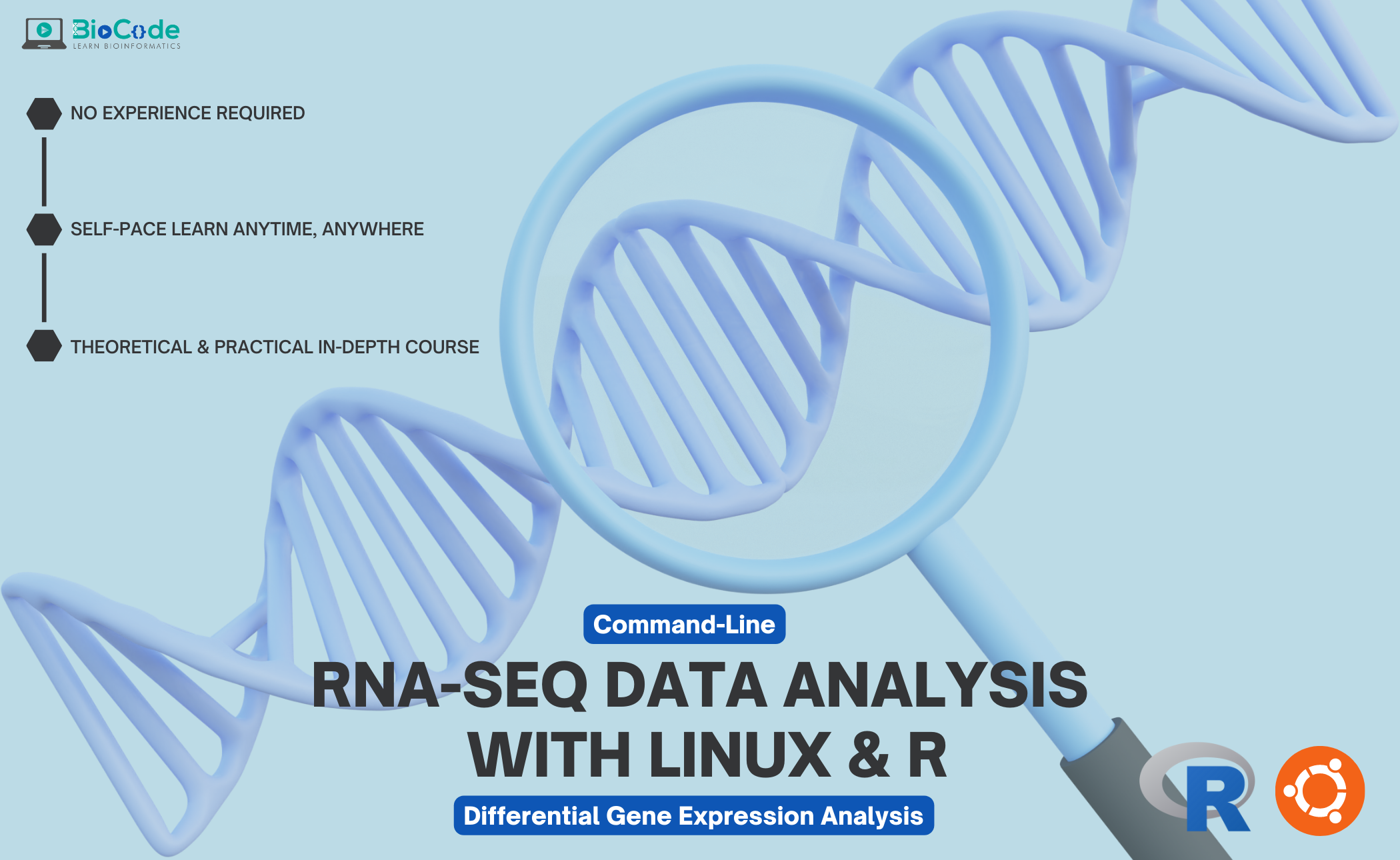
- 1 Command-line Based Practical RNA-Seq Data Analysis With Linux & R
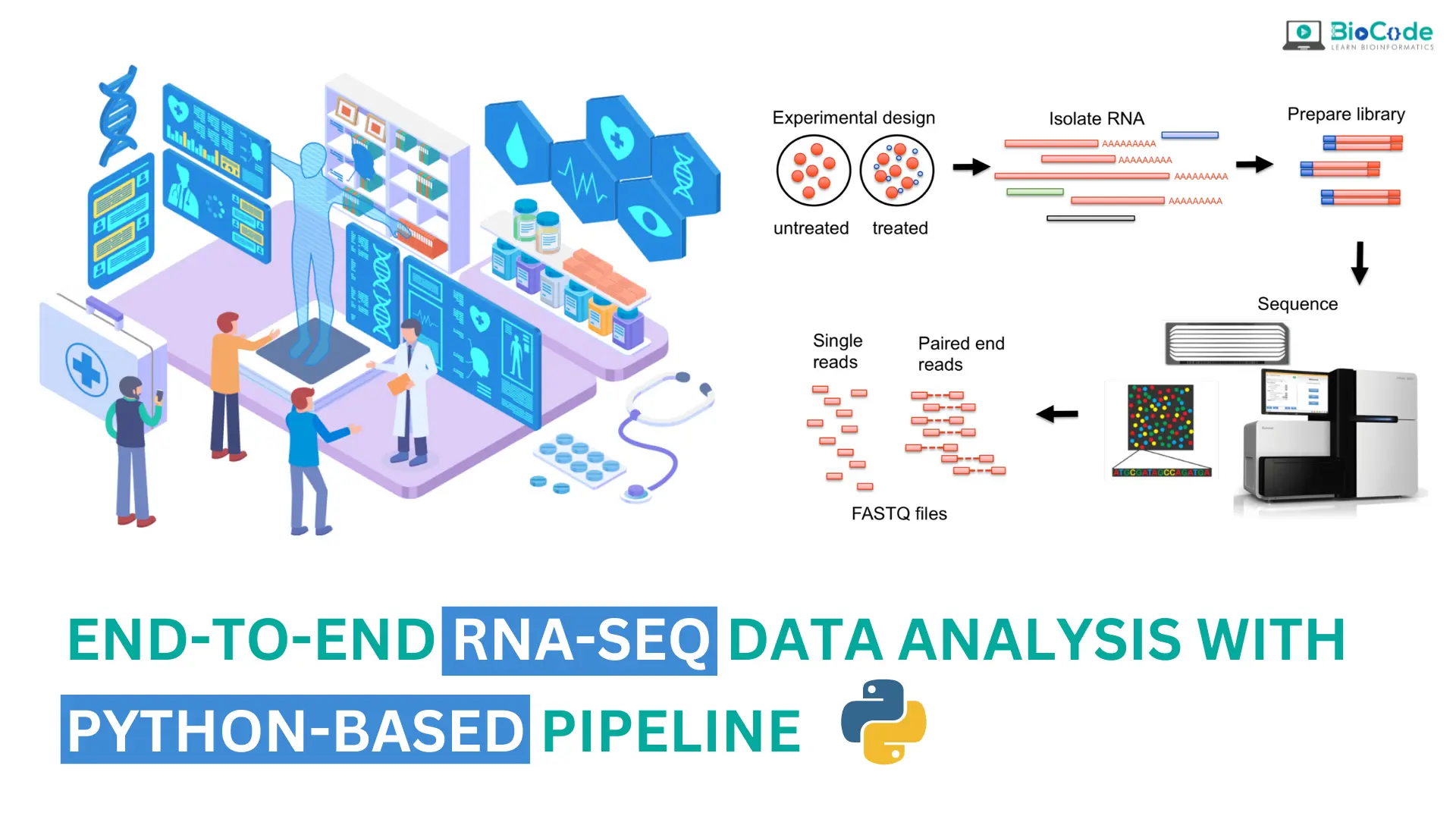
- 2 End-to-End RNA-Seq Data Analysis With Python-Based Pipeline
- 3 Hands-on: Single-Cell RNA-Sequencing Data Analysis Using Command-Line and R [Complete Training] · you're here
- 4 Hands-on: Single-Cell RNA-Sequencing Data Analysis Using Python [Complete Training]
Not ready to enrol?
Get the free syllabus & course updates
We'll email you the full outline for this course plus a starter guide — no spam, unsubscribe anytime.
![Route through Hands-on: Single-Cell RNA-Sequencing Data Analysis Using Command-Line and R [Complete Training]](https://www.biocode.org.uk/wp-content/uploads/biocode-course-maps/course-35671-0ef3519e2d.svg)
This course is part of Annual All Access at $199.00 a year, which opens every specialist course as well. See what that opens
Tools & technologies you'll use
- Python
- R
- Linux
- Bash / CLI
- Seurat
- Scanpy
- Cell Ranger
Course Content
In-depth Introduction to Single Cell RNA-Sequencing, Pipeline and Single-Cell Technologies
-
Introduction to Single-Cell RNA-seq, Its Pipeline and Analysis
23:34 -
Gene Expression and Its Significance
21:42 -
Cellular and Tumor Heterogeneity
09:10 -
Bulk RNA-sequencing vs. Single-Cell RNA-sequencing
21:50 -
Single-Cell RNA-seq Technologies (10x Genomics, Smart-Seq, Drop-seq and more)
23:09 -
Cell Isolation and Cell Lysis Protocols for Single-Cell Genomics
09:53 -
In-depth Introduction to Single-Cell RNA-sequencing Analysis Pipeline
24:45 -
Droplet Technologies: 10x Genomics
14:10 -
Full-Length Transcript Technologies: Smart-Seq2
17:55
Hands-on Single-Cell RNA-seq Data Analysis (From Raw Reads to Cell Subpopulation Identification and DEGs Identification)
Additional Supplementary Lectures
Earn a certificate
Add this certificate to your resume to demonstrate your skills & increase your chances of getting noticed.
Student Ratings & Reviews
Common questions
Do I need any prior experience for this course?
The course is taught from first principles, so you do not need previous experience with the specific tools it covers. A working understanding of molecular biology will help you get more from it.
How long does Hands-on: Single-Cell RNA-Sequencing Data Analysis Using Command-Line and R [Complete Training] take to complete?
The course contains roughly 10 hours 24 minutes of material across 3 sections. It is self-paced, so you can work through it as quickly or slowly as suits you.
How long do I have access after enrolling?
Access is lifetime. Once you enrol you keep the course and any future updates to it, with no recurring fee.
Do I get a certificate?
Yes — you receive a certificate of completion once you finish the course, which you can share on LinkedIn or include in a CV.
Is this course hands-on or theory only?
It is project-based. You work with real research datasets and run the analyses yourself rather than only watching them being explained.
![Hands-on: Single-Cell RNA-Sequencing Data Analysis Using Python [Complete Training]](https://www.biocode.org.uk/wp-content/uploads/2023/02/Course-Thumbnail-for-Hands-on-Single-Cell-RNA-Sequencing-Data-Analysis-Using-Python.webp)

